
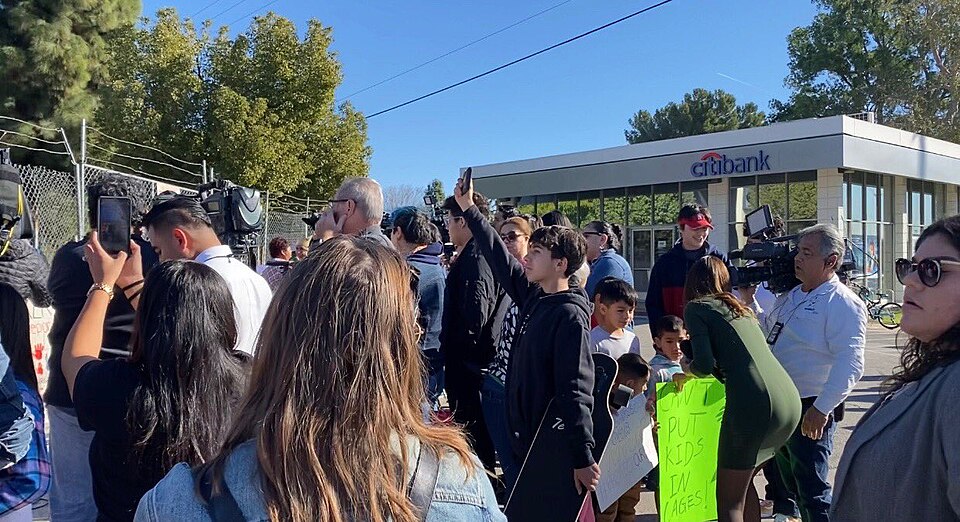
A United States senator was tear-gassed during violent protests outside an Immigration and Customs Enforcement detention center on Monday, escalating tensions as hundreds of migrants inside staged a hunger strike and authorities blocked state officials from entering the facility.
Chaos Erupts at Detention Center
The confrontation unfolded when protesters attempting to breach the ICE facility clashed with federal authorities, who deployed pepper spray and tear gas to control the crowd. The senator, whose state includes the detention center, was caught in the chemical dispersal while observing the demonstrations. The Department of Homeland Security had earlier denied entry to the state’s governor, who sought to inspect conditions inside the facility where migrants were refusing food.
Hundreds of detainees participated in the coordinated hunger strike, raising questions about conditions within the federal facility. The protest action by migrants coincided with organized demonstrations outside the center, creating a volatile situation that required significant law enforcement presence. Federal authorities maintained control of the perimeter while managing both external protests and internal unrest.
Federal-State Standoff Intensifies
The governor’s denied entry marked a sharp escalation in tensions between state officials and federal immigration enforcement. State leaders have increasingly sought access to detention facilities within their borders, citing oversight responsibilities and constituent concerns. The Department of Homeland Security maintained that facility operations fall under exclusive federal jurisdiction, rejecting state attempts to conduct independent inspections or welfare checks on detainees.
The senator’s exposure to chemical agents during the protests highlighted the increasingly confrontational nature of immigration enforcement disputes. State officials argued they have legitimate interests in monitoring conditions at facilities housing individuals within their jurisdictions. Federal authorities countered that operational security and immigration enforcement priorities require centralized control without state interference.
Immigration Enforcement Under Scrutiny
The incident reflects broader national debates over immigration detention practices and the balance between federal authority and state oversight. Hunger strikes at detention facilities have become more frequent as migrants protest conditions and seek attention for their cases. The coordinated nature of Monday’s events, with simultaneous internal protests and external demonstrations, suggests organized advocacy efforts challenging current enforcement policies.
The confrontation raises constitutional questions about federal supremacy in immigration matters versus state police powers and welfare responsibilities. As immigration enforcement remains politically divisive, incidents like Monday’s clash demonstrate how policy disagreements can escalate into physical confrontations involving elected officials, protesters, and federal agents.
Why do they call them migrants, They are illegal immigrants with the key word illegal!
Not all “illegal”, Ricky. You might one day become a guest of Trump’s attempt to have total control of your life and everyone else. Wake up and take off your MAGA hat and underpants and smell the roses.
Prove it my friend.
There is zero proof of your claim..
You and your ancestors are immigrants also, Rick! Do you know why they call the UNITED STATES OF AMERICA? Because all of us came from all over the world to this country, unless, you are full blood of American Indians.
Everything you stated is wrong..LOL No, we aren’t immigrants. We were born here.. United States means a group of states that joined for a common goal… Indians are not native to North America…
Yes but they did it legally my family is seven generations of Montanans. All done legally been here since 1879
Check his real credentials. He could be a Chinese spy
Notice they didn’t say who the senator was. Since both of our senators are members of the dying Donkey Party, and there are only two senators, we have a 50-50 chance of which one got pepper sprayed.
The money used for these detention centers should be used to deport the illegal immigrants as soon as their status is verified. There is no good reason to warehouse these people. This is the 21st century, so confirming citizenship or legal entry should be almost immediate.