
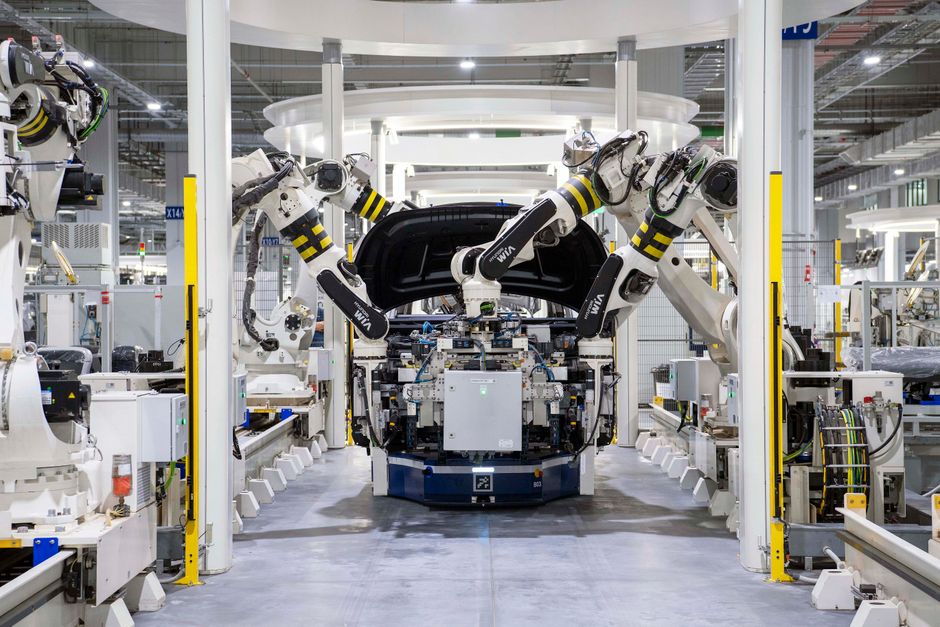
A Stellantis automotive worker died after being struck by a robot during retooling operations at a Detroit manufacturing facility, raising urgent questions about industrial safety protocols as manufacturers increasingly rely on automated machinery in American factories.
Fatal Incident During Plant Operations
The worker was killed while the facility underwent retooling operations, a process where production lines are reconfigured or updated with new equipment and automation systems. Stellantis, the multinational automaker formed from the merger of Fiat Chrysler and France’s PSA Group, confirmed the fatality at its Detroit location. The company operates multiple manufacturing plants across the Motor City, employing thousands of workers who build vehicles for brands including Chrysler, Dodge, Jeep, and Ram.
Stellantis worker is killed by ROBOT while retooling car factory https://t.co/a5AjrIsblC via @DailyMail
— Sonny (@saveamerica64) August 18, 2026
Retooling operations typically involve significant changes to factory floor layouts, including the installation, removal, or reprogramming of industrial robots. These periods carry heightened risk as workers interact with machinery in non-standard configurations. The specific circumstances of how the robot struck the worker remain under investigation by workplace safety authorities.
Growing Concerns Over Factory Automation
The tragic incident highlights mounting safety concerns as American manufacturers accelerate automation adoption to remain competitive. Industrial robots, while designed with safety features including emergency stops and protective barriers, can malfunction or operate unpredictably during installation and testing phases. Manufacturing facilities must balance productivity demands with worker protection, especially during transition periods when traditional assembly processes are modified.
Stellantis has invested billions in modernizing its North American manufacturing footprint, including substantial automation upgrades across Detroit-area plants. The company’s push mirrors industry-wide trends as automakers compete with foreign manufacturers and adapt to electric vehicle production demands. These technological transformations require workers to operate alongside increasingly sophisticated robotic systems.
Implications for American Manufacturing
This fatality arrives as Detroit automakers face pressure to maintain domestic production while controlling costs. Union representatives have consistently advocated for stronger safety protocols during automation transitions, arguing that rushed implementation endangers workers. Federal workplace safety regulations require specific protections during robot installation and maintenance, including lockout procedures preventing unexpected machine activation. Investigators will examine whether proper safety measures were followed during the retooling operation. The incident serves as a sobering reminder that technological advancement must not compromise the safety of American workers who power the nation’s manufacturing sector.
Why has this news taken over 1 year to be reported? How did something this tragic get swept under the rug for so long?
Ask who ben efitted by delaying the story?
The way it reads is that it just happened. Most Americans want to know as soon as possible this is a lack of conscience from this supposed NEWS Media within the USA. It’s shameful Bless this family and other workers in this facility. This is or was terrible
Natural selection at work once again. Chance are the employee put themselves into a bad position leaving no room to escape if something went wrong. Accidents happen but unfortunately sometimes they are fatal. As an electrician I am exposed to many dangers on the job, but with proper planning and execution everyone should go home the same way they came to work. ALIVE!
Seems people like TH, Burke and San dra Akins know nothing about working in the trades or manufacturing type of work. You people are not that important to be notified right away, so get over yourselves.
If I hat to guess the person killed was not following proper LOTO protocol.