
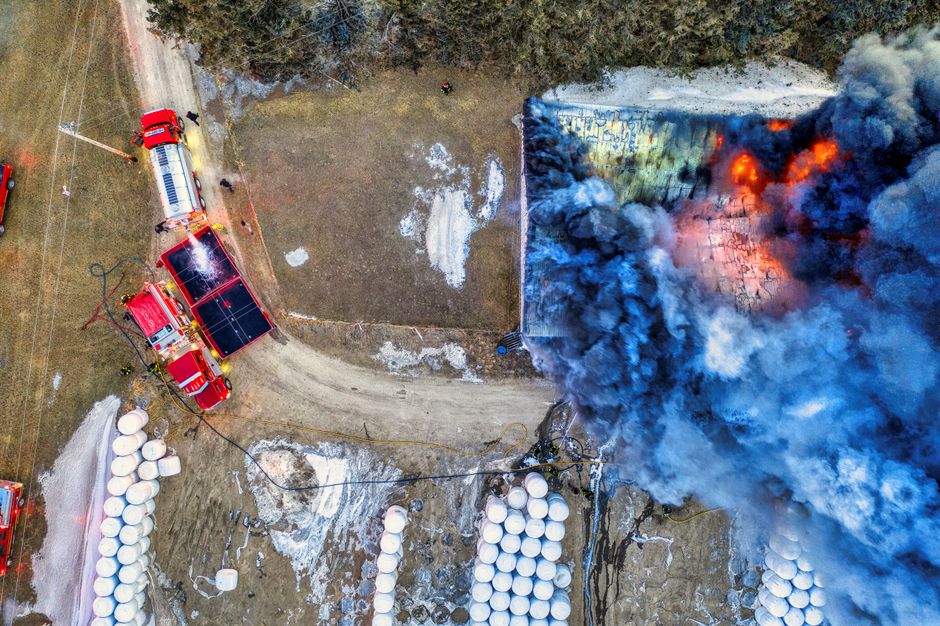
A dangerous warehouse fire in Los Angeles sent massive plumes of dark smoke across the Boyle Heights neighborhood Wednesday afternoon, forcing officials to issue emergency shelter-in-place orders for nearby residents as firefighters battled potential hazardous material threats.
Emergency Response and Hazardous Materials Threat
Los Angeles Fire Department crews arrived at the scene around 2:30 p.m. to find flames consuming the roof of a massive cold storage facility. The building, covered in solar panels, generated thick black smoke visible for miles across the city. Officials immediately warned residents of hazardous materials nearby, instructing them to close all windows, doors, and vents, turn off air conditioning systems, and shelter indoors with pets and family members.
Fire Department spokesperson Jennifer Middleton reported initial concerns about flames reaching an ammonia line within the facility. Such a breach could have released toxic gas into the surrounding community. However, firefighters successfully contained the blaze before reaching the dangerous refrigerant system, and the ammonia threat dissipated as crews gained control of the situation.
Massive Cold Storage Facility Involved
The burning structure houses operations for Lineage Logistics, a company specializing in frozen and temperature-controlled goods transport. The facility spans 491,000 square feet of warehouse space, equivalent to roughly nine football fields. By late afternoon, firefighters had extinguished the roof blaze and began entering the building to assess interior damage and potential hazards. The company did not respond to requests for comment about the incident or potential contents that may have contributed to the hazardous materials warning.
Community Safety Concerns
The Boyle Heights neighborhood faced significant disruption as emergency alerts directed residents to take immediate protective action. Local news footage captured dramatic scenes of smoke billowing from the warehouse roof while solar panels added complexity to firefighting efforts. The combination of industrial refrigeration chemicals, large-scale cold storage operations, and potential electrical hazards from rooftop solar installations created a challenging environment for first responders working to protect the densely populated surrounding area from exposure to toxic fumes.
Make up excuses but the fact is the solar panel caused the fire. Most likely the solar panels had a short or one of the regulators failed. But California officials will never admit that.