
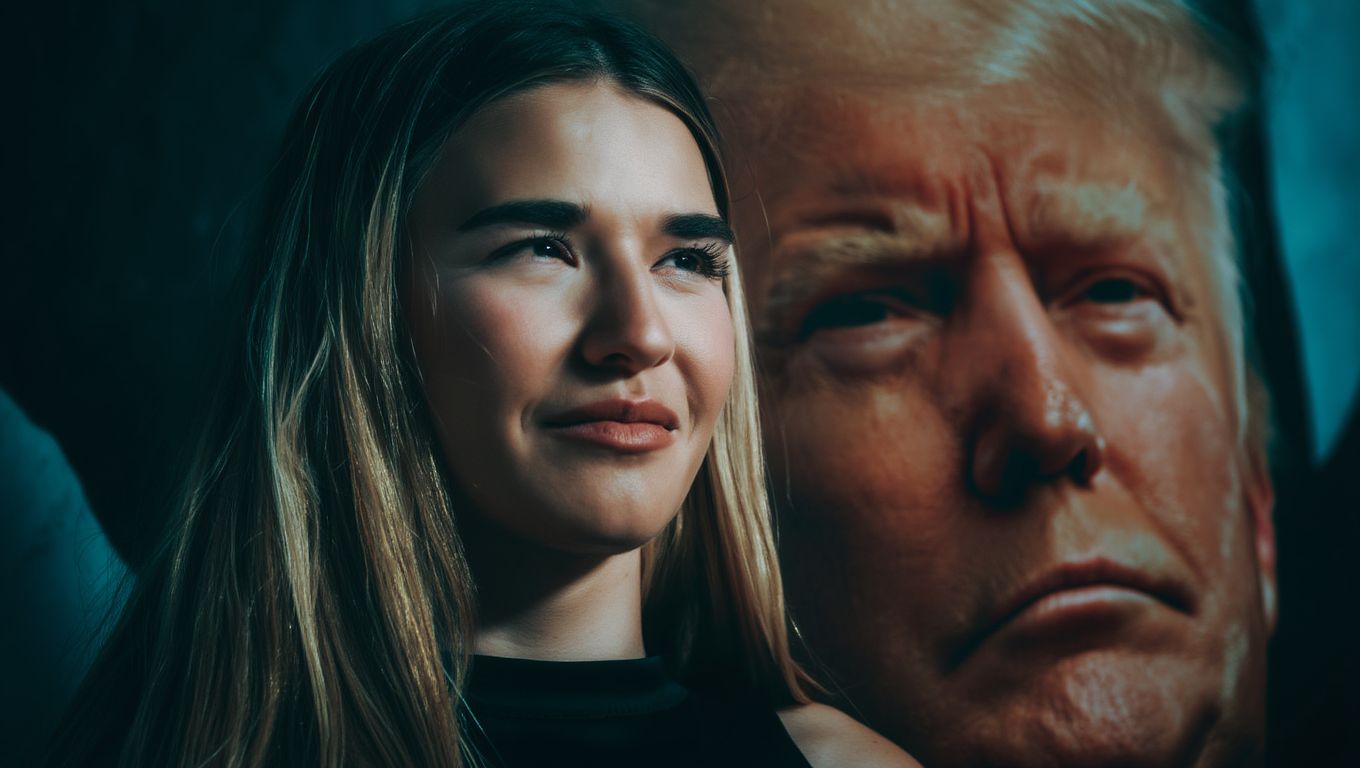
In an era where political discourse has devolved into tribal warfare and social media echo chambers, a refreshing voice of reason has emerged from an unexpected source. Kai Trump, granddaughter of President Donald Trump, delivered a masterclass in political maturity during her recent appearance on Logan Paul’s podcast that should serve as a wake-up call for Americans across the political spectrum.
Her candid assessment that “politics is a dangerous thing” isn’t the naive observation of a sheltered young woman—it’s the astute judgment of someone who has witnessed firsthand how our political system has become weaponized against families, relationships, and basic human decency.
A Generation Wiser Than Their Elders
What makes Kai’s perspective so compelling is her refusal to be drawn into the partisan hatred that has consumed so much of our national conversation. Despite having every reason to harbor resentment toward those who have relentlessly attacked her family for years, she demonstrates a level of grace and wisdom that puts many seasoned politicians to shame.
When asked about Vice President Kamala Harris, Kai’s response was remarkably measured: “There’s no bad blood. I’m very much in the middle.” This isn’t weakness—it’s strength. It takes real character to rise above the political fray when your family has been subjected to unprecedented scrutiny and often unfair treatment.
Her observation about the radical extremes on both sides resonates because it reflects what most Americans actually believe. The vast majority of our fellow citizens aren’t interested in the performative outrage and manufactured controversies that dominate cable news and social media feeds. They want leaders who can find common ground and solve problems, not score political points.
The Social Media Problem Nobody Wants to Address
Perhaps most insightfully, Kai identified social media as a key driver of political extremism. Her analysis that platforms create algorithmic bubbles where “your feed be one way or the other” with little middle ground is spot-on. This technological reality has profound implications for our democracy that we’re only beginning to understand.
The young Trump’s recognition that social media “makes some people crazy and some people buy into it too much” should be required reading for anyone trying to understand our current political moment. These platforms profit from engagement, and nothing drives engagement like anger and outrage. The result is a feedback loop that rewards the most extreme voices while marginalizing reasonable discourse.
Logan Paul: “¿Cómo es Barron Trump?”
Kai Trump: “Es un gran tipo. Creo que realmente no le gusta mucho el ojo público, lo cual entiendo.
Él está en la Universidad de Nueva York, en la escuela de Negocios, y allí está viviendo su vida.” pic.twitter.com/DAXHF9SKMd
— Gerard Oria Pérez (@gerardoriap) January 7, 2026
This isn’t just an abstract problem—it’s reshaping how Americans relate to each other and their government. When algorithms feed us increasingly extreme content to keep us scrolling, is it any wonder that political compromise seems impossible?
Family Values in the Spotlight
Kai’s protective instincts toward her “Uncle B”—Barron Trump—reveal something beautiful about the Trump family dynamic that rarely gets coverage in mainstream media. Her description of Barron as “a great guy” who simply “doesn’t like the public eye” humanizes a young man who has grown up under extraordinary circumstances.
The detail about Barron whispering something “nice” to former President Biden during the inauguration ceremony speaks to the kind of basic decency and respect that should characterize American political life. Despite all the partisan rancor, there are still moments of genuine human connection that transcend political differences.
This is what healthy family relationships look like—supporting each other while maintaining individual perspectives and boundaries. The Trump family’s ability to raise young people with such levelheaded views despite years of intense public scrutiny says something positive about their values and priorities.
The Price of Public Service
Kai’s honest discussion about the challenges of dating with Secret Service protection offers a rare glimpse into the personal sacrifices that come with public service. Her admission that it’s “awkward” and “weird” to have agents “like two tables behind you” on dates reminds us that political families pay real costs for their involvement in public life.
Yet rather than complaining or seeking sympathy, she’s adapted with remarkable maturity. Her strategy of trying to “focus and pretend like they’re not there” while acknowledging that “the first few months were tough” shows resilience that would serve any young American well.
No way KAI TRUMP explained that SECRET SERVICE is not the POLICE and they are only there to PROTECT her not stop ILLEGAL activity and Logan Paul was so CONFUSED 😳👀 pic.twitter.com/etVHuNgSQc
— Streamer Binge (@streamerbinge_) January 7, 2026
This perspective should give pause to those who casually demonize political figures and their families. Behind the public personas are real people dealing with extraordinary circumstances and making genuine sacrifices for their country.
A Blueprint for American Unity
Kai Trump’s approach offers a roadmap for how Americans might begin to heal our political divisions. Her emphasis on meeting “in the middle” isn’t about abandoning principles—it’s about recognizing our shared humanity and common interests.
Her generation has grown up watching political discourse become increasingly toxic and destructive. They’ve seen how social media amplifies the worst impulses while drowning out reasonable voices. Many have concluded, as Kai has, that the current system isn’t serving anyone well.
This creates an opportunity for leaders who can offer a different path forward. Americans are hungry for politicians who can disagree without being disagreeable, who can fight for their beliefs without demonizing their opponents, and who can put the country’s interests above partisan advantage.
The Future of American Politics
If Kai Trump represents the future of American political engagement—informed but not consumed, principled but not rigid, loyal but not blind—then perhaps there’s reason for optimism. Her generation has the potential to reject the toxic patterns that have characterized recent political discourse and forge a healthier path forward.
Her decision to focus on her golf career at the University of Miami rather than diving into politics shows wisdom beyond her years. Sometimes the best way to serve your country is to excel in your chosen field and model the kind of character and values that make America great.
As we face continued political challenges and social divisions, Kai Trump’s voice reminds us that common sense, basic decency, and genuine patriotism haven’t disappeared from American life—they’re just being drowned out by louder, angrier voices that profit from division.
Her message is simple but profound: we can do better. We can choose unity over division, understanding over hatred, and progress over performative politics. The question is whether we have the wisdom and courage to follow her example.
If these are Kai’s words, I think she should be our first female president. Her Grandfather has spent most of his first year defending himself against the Democrats. It doesn’t matter if things have improved or things are working to improve our lives the democrats just want to run our lives. I have not heard one thing from them to make things better they just don’t like anything he does.