

A widely used agricultural pesticide more than doubles the risk of developing Parkinson’s disease, according to new UCLA research that identifies how the chemical damages brain cells and points toward potential treatments.
Alarming Connection Between Chemical Exposure and Brain Disease
Researchers at UCLA discovered that people with long-term exposure to chlorpyrifos were 2.5 times more likely to develop Parkinson’s disease compared to those without exposure. The study, published in Molecular Neurodegeneration, represents the first time scientists have identified the specific biological process linking this pesticide to the degenerative brain disorder. The findings raise serious questions about chemical regulations and their impact on American farmers, agricultural workers, and rural communities who face the highest exposure risks.
Chlorpyrifos has been used extensively on American farms for decades to protect crops including corn, soybeans, fruit trees, and vegetables. While federal authorities banned the pesticide for residential use in 2001, agricultural applications continued largely unrestricted until 2021 when the Biden administration imposed additional federal limitations. Despite these restrictions, the chemical remains in use on some U.S. crops and continues to be widely applied in other countries.

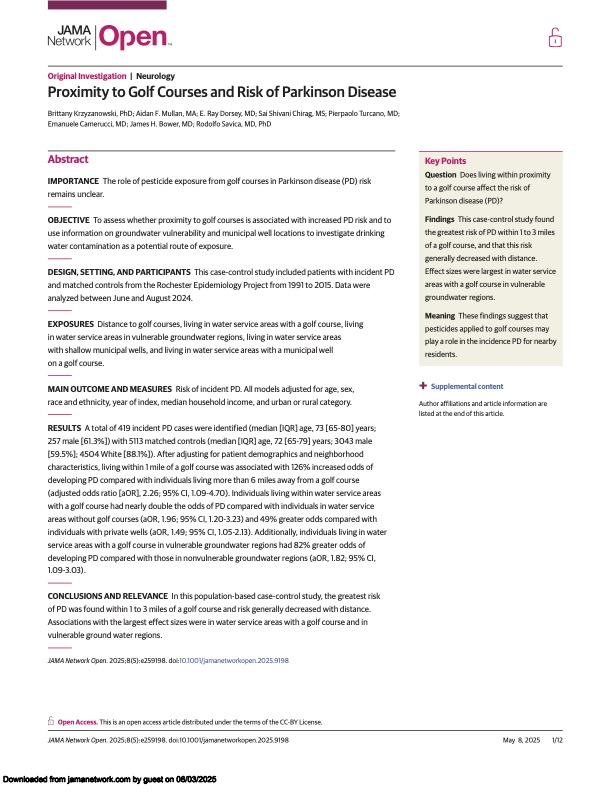
Living within 1 mile of a golf course increased Parkinson’s risk by 126% compared to living over 6 miles away, and the greatest risk (a 198% increase) was observed for those living 1–2 miles from a golf course!
People relying on
Scientific Breakthrough Offers Treatment Hope
The UCLA research team identified the specific mechanism by which chlorpyrifos damages neurons in the brain. This discovery could lead to new therapeutic approaches for Parkinson’s disease, which currently affects approximately one million Americans. The breakthrough provides hope for treatment development while highlighting the long-term consequences of pesticide exposure that may have affected thousands of agricultural workers and their families over multiple generations.
Regulatory Questions and Property Rights
The findings intensify debate over federal authority to restrict agricultural chemicals versus farmers’ rights to protect their crops and livelihoods. Many agricultural producers argue that excessive regulations threaten food security and increase costs for American families. The pesticide ban has forced some farmers to adopt more expensive alternatives or accept higher crop losses, raising questions about whether federal agencies properly balanced health concerns against economic impacts on rural America.
What This Means
This research confirms that federal chemical restrictions, while controversial among agricultural producers, may have protected countless Americans from serious neurological harm. Families with members who worked in agriculture before 2021 should discuss Parkinson’s disease risk factors with their physicians. The findings underscore the importance of evidence-based policymaking that protects American health while respecting the concerns of farmers who feed the nation.