
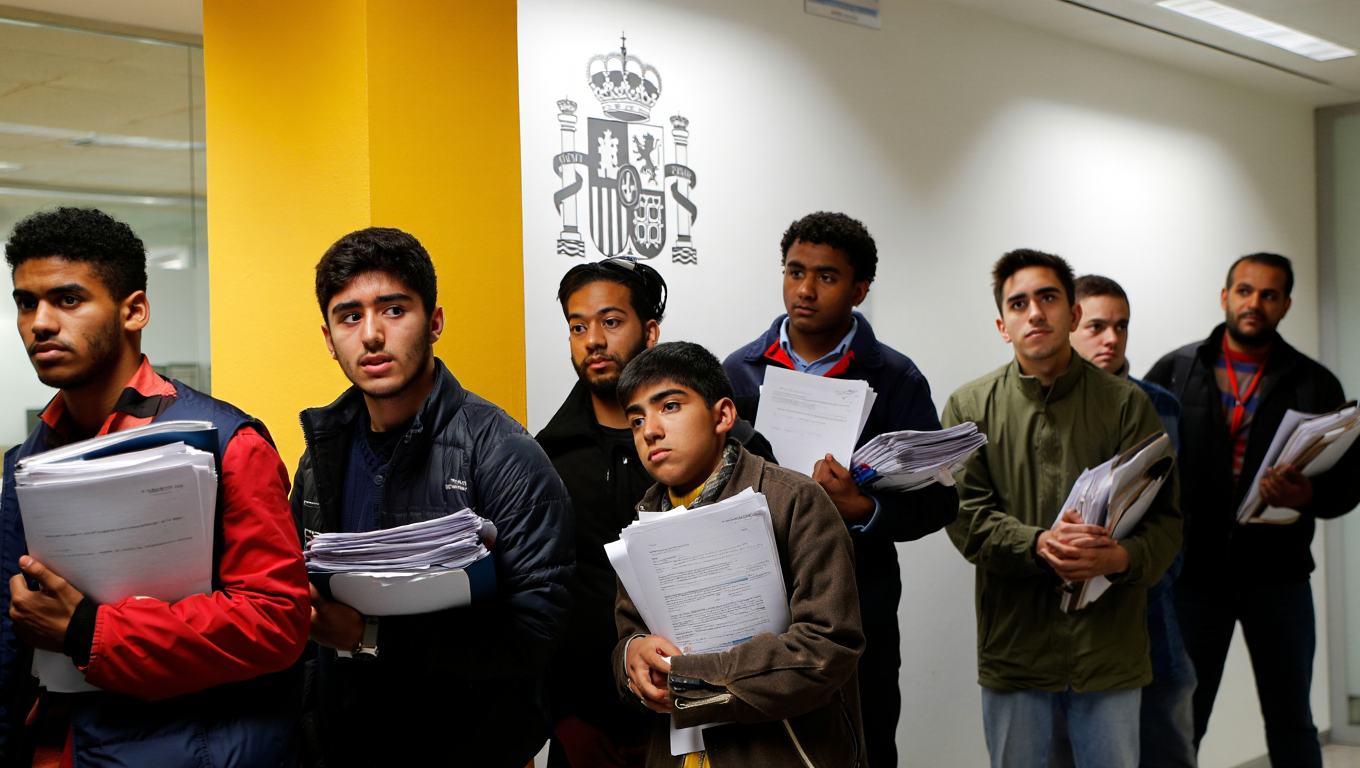
Spain announced plans to legalize up to 500,000 undocumented migrants while the United States implements stricter immigration policies under President Trump, creating a stark contrast in immigration approaches between the two nations.
Spain’s Immigration Overhaul
Prime Minister Pedro Sanchez’s government justified the massive legalization program as economically necessary for Spain’s aging workforce. Migration Minister Elma Saiz stated the government refuses to ignore people already living in the country, emphasizing the policy aims to provide dignity and recognition to undocumented residents. The announcement represents a significant departure from the tightening immigration policies adopted by other European nations.
🚨SPANISH GOVERNMENT GIVES HALF A MILLION ILLEGAL MIGRANTS RIGHT TO VOTE
They explicitly say this is to 'defeat the far right'
So there you have it
That's the planLet them all in then tell them all to vote left wing
This is Keir Starmer's plan. pic.twitter.com/EDs4dBYmLW
— Basil the Great (@BasilTheGreat) January 28, 2026
Conservative opposition parties launched fierce criticism of the legalization plan. Vox party leader Santiago Abascal condemned the measure as harmful to Spanish citizens, describing it as a criminal policy that could encourage more irregular migration. The populist leader suggested critics fear his party’s growing political influence rather than genuinely opposing the immigration policy.
European Concerns and Analysis
International policy experts warn Spain’s decision could attract more illegal migrants to Europe, creating problems for neighboring countries. Alan Mendoza from the Henry Jackson Society suggested other European nations might seek agreements to transfer their undocumented migrants to Spain if the country welcomes such populations. The policy challenges the dominant European approach of treating irregular migration primarily as a law enforcement issue.
His ancestors fought for 700 years during the Reconquista (722 to 1492) to remove the Muslims from Spain.
Now they are throwing it all away and just giving Spain back to the Muslims. https://t.co/YozrRN0yKV pic.twitter.com/OgJE4jbzZE
— Wall Street Mav (@WallStreetMav) January 27, 2026
What This Means
Political science professor Ricard Zapata-Barrero characterized Spain’s approach as pragmatic governance rather than lenient policy, arguing that hundreds of thousands living illegally for years represents a structural problem requiring institutional solutions. The initiative sets Spain apart from other European Union members and establishes a political experiment that could influence future immigration policies across Europe. Whether this becomes a model or a cautionary tale remains uncertain as other nations observe the results.