
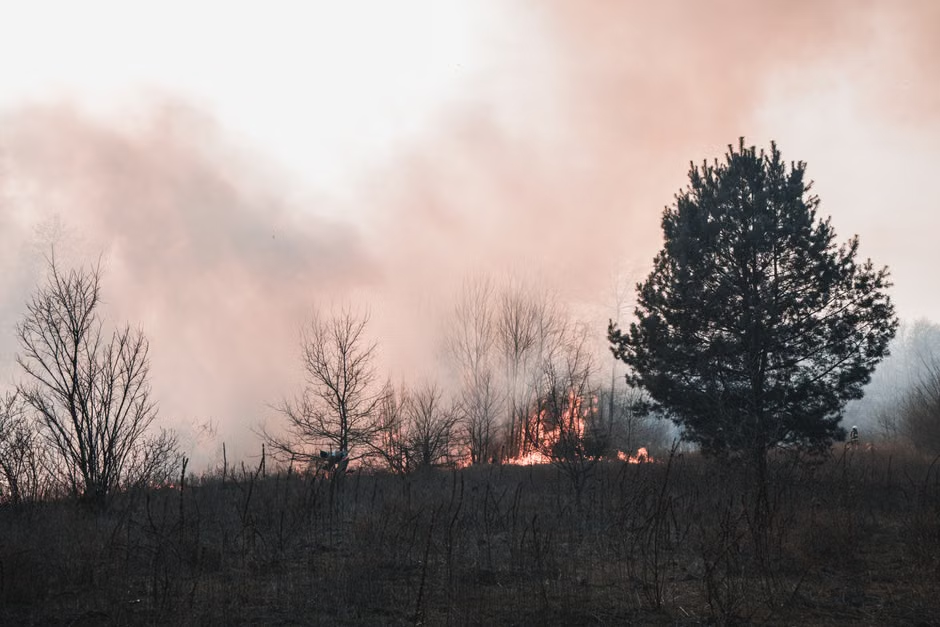
Wildfires raging through northeastern Minnesota have trapped thousands of people in remote wilderness, forcing dramatic air rescues and spreading hazardous smoke across the Eastern United States. Between 6,000 and 10,000 people were caught in the Boundary Waters when fires erupted, with first responders completing 17 air evacuations in a single day.
Emergency Evacuations in Remote Wilderness
St. Louis County declared a local emergency as at least 17 fires burned across Superior National Forest and the Boundary Waters Canoe Area Wilderness. The Boundary Waters, a 1.1 million-acre wilderness accessible primarily by canoe, presented unique rescue challenges. By Wednesday, officials reported approximately 90 percent of stranded visitors had been evacuated from the remote area.
Minnesota Governor Tim Walz confirmed Canadian authorities assisted in rescuing two groups of YMCA campers stranded near the border. One group was trapped on an isolated sandbar. The coordinated rescue effort highlighted the severity of conditions as flames consumed more than 33,000 acres across the region. Officials said hot, dry and windy conditions combined with numerous lightning strikes accelerated the fire spread throughout the national forest.
Hazardous Smoke Blankets Eastern States
Smoke from Minnesota fires and additional Canadian wildfires has created unhealthy air quality across much of the Midwest and Northeast. Air quality reached hazardous levels in parts of northeastern Minnesota, affecting millions of people hundreds of miles from the actual flames. The smoke plume blanketed major metropolitan areas, forcing health warnings for vulnerable populations including children, elderly residents, and those with respiratory conditions.
Extreme temperatures complicated firefighting efforts, with some areas exceeding 100 degrees. Phil Manuel, an incident meteorologist with the National Weather Service, offered a sobering forecast about containment prospects. Manuel said forecasted rain may provide limited relief but is unlikely to eliminate the fire threat completely. He warned these fires will likely persist until winter snowfall arrives in the region.
Long-Term Fire Management Ahead
Minnesota officials acknowledged fire plays a natural role in northern forest ecosystems, but fires at this scale are unusual. State authorities indicated some Boundary Waters fires may be allowed to burn indefinitely if they pose no threat to people or property. This management approach reflects the remote nature of affected areas and the practical limitations of suppressing large-scale wilderness fires. The decision balances ecological considerations with public safety concerns as firefighting resources remain stretched thin across multiple active fire zones in the Superior National Forest.