
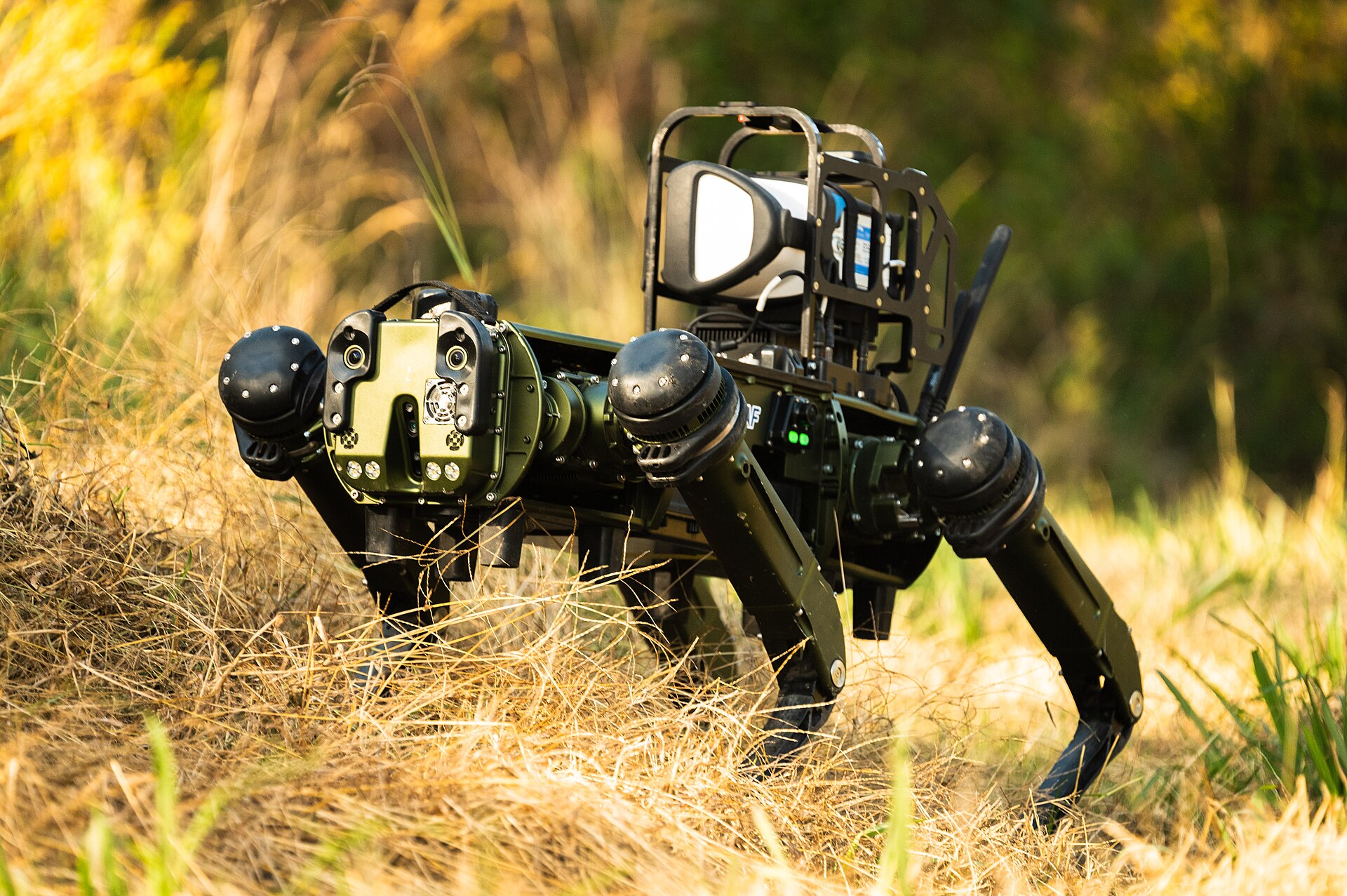
Law enforcement deployed a robotic dog during an armed barricade situation in a New Jersey neighborhood Wednesday morning, marking the latest use of advanced technology in dangerous standoff scenarios that keep officers out of the line of fire.
Armed Response in Quiet Neighborhood
Police and SWAT teams surrounded a residence on the 4400 block of Bethel Avenue in Pennsauken around 10 a.m. following reports of a shooting and barricade situation. Officers took positions at a distance from the home with weapons drawn as the tense standoff unfolded. The deployment of a robotic canine unit, captured by aerial news footage entering the home’s garage, demonstrated how police increasingly rely on technology to assess threats before putting human officers at risk during volatile confrontations.
Neighbors expressed shock at the heavy police presence in what they described as a typically peaceful residential area. One local resident told reporters that incidents of this nature rarely occur in the community, making the armed response particularly jarring for those who live nearby. The sight of SWAT teams and robotic equipment transformed the quiet street into an active crime scene for several hours.
Situation Resolved Without Public Threat
Authorities confirmed the standoff ended without ongoing danger to surrounding residents or the broader community. However, police have released limited information about the incident’s specifics, including whether any victims were involved in the reported shooting or if arrests were made. The lack of detail about suspects or charges leaves questions about what triggered the emergency response and how the situation ultimately resolved. Law enforcement agencies often withhold information during active investigations to protect case integrity.
Technology in Modern Policing
The robotic dog deployment reflects a growing trend in law enforcement’s adoption of unmanned technology for high-risk operations. These remote-controlled units allow officers to gather intelligence, assess dangerous environments, and communicate with barricaded individuals while maintaining safe distances. The technology has become increasingly common in SWAT operations nationwide, particularly in situations where suspects may be armed and traditional negotiation tactics prove challenging. The devices provide real-time video and audio feeds, giving commanders critical information to make tactical decisions without exposing personnel to immediate danger.