
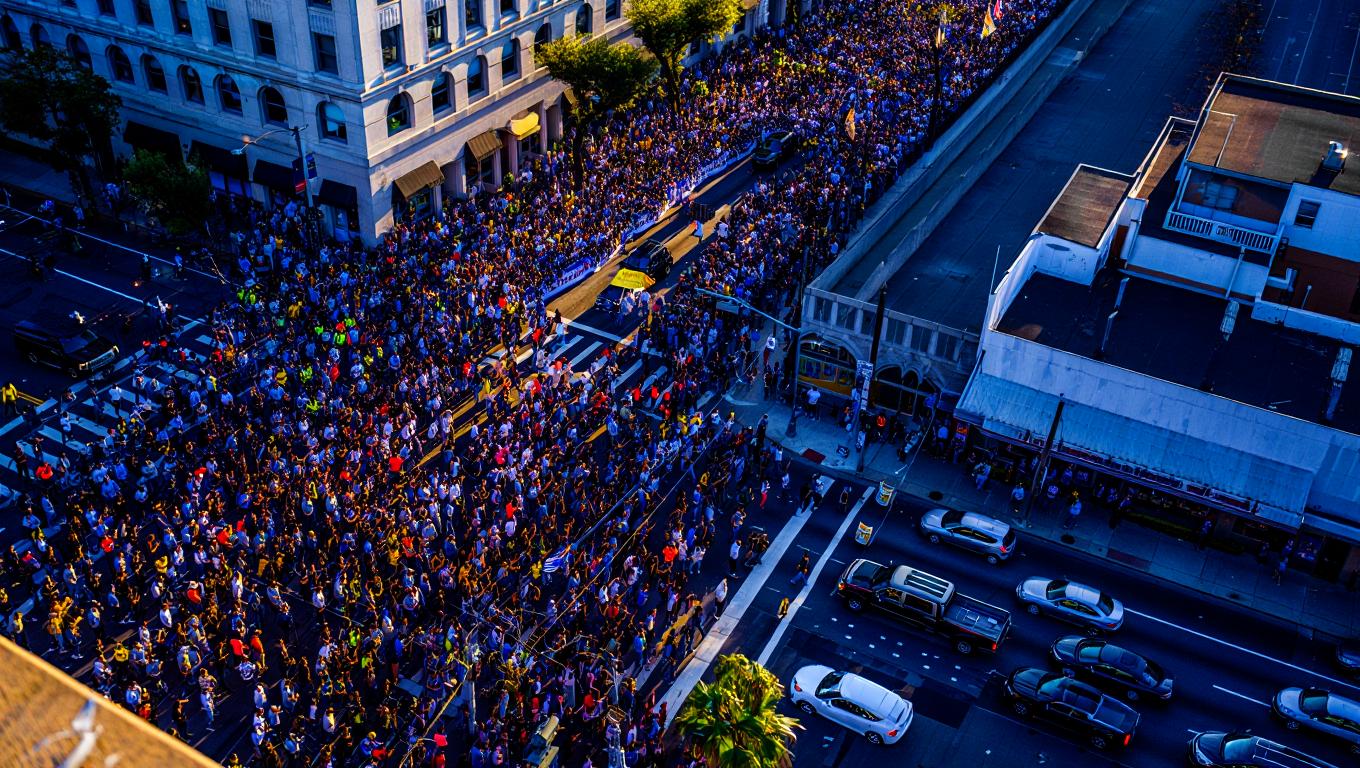
Communities nationwide honored the legacy of Dr. Martin Luther King Jr. on Monday with commemorative events that blended traditional celebration with pointed political commentary directed at the current administration. The federal holiday, marking what would have been King’s 97th birthday, drew thousands to parades, service projects, and educational programs across the United States.
In Washington, D.C., organizers staged their 21st annual peace walk and parade, continuing a tradition that began in 1977 as part of the broader movement to establish King’s birthday as a federal holiday. Participants marched along Martin Luther King Jr. Avenue under this year’s theme: “The Struggle is Real! THE FIGHT IS STILL!”—a message that resonated with speakers who drew parallels between King’s era and contemporary political challenges.
Nationwide Observances Blend Service with Advocacy
The holiday’s observance extended far beyond ceremonial recognition, with community organizations using the platform to address ongoing social justice concerns. In the nation’s capital, parade organizers combined commemoration with practical community support, hosting a health and wellness fair that distributed free groceries and connected residents with mental health resources.
The Smithsonian’s National Museum of African American History and Culture opened its doors for family-oriented programming, offering educational activities that included craft workshops, service projects, and presentations on African American cultural traditions. These events attracted diverse audiences seeking to engage with King’s message through both learning and direct community action.
Atlanta, King’s birthplace, served as another focal point for Monday’s observances, though specific details of events in the civil rights leader’s hometown were still developing as communities gathered throughout the day. The city has historically hosted some of the nation’s most significant MLK Day commemorations, drawing national political figures and civil rights leaders.
Political Undertones Shape Holiday Messaging
This year’s commemorations carried particular political weight, with several community leaders using their platforms to critique current federal policies. The timing proved especially significant, coming during the early weeks of the Trump administration’s second term, when civil rights organizations have expressed concerns about potential policy reversals affecting voting rights, immigration, and social programs.
Speakers at various events referenced King’s philosophy of nonviolent resistance while drawing connections to contemporary political movements. This year’s Washington parade theme – emphasizing that “the struggle is real” and “the fight is still” ongoing – reflected organizers’ view that King’s mission remains incomplete nearly six decades after his assassination.
Civil rights advocates have increasingly used MLK Day as an opportunity to mobilize supporters around current issues, transforming the holiday from a purely commemorative observance into active political engagement. This approach aligns with King’s own emphasis on action over passive remembrance, though it also introduces contemporary partisan divisions into traditionally unifying celebrations.
King’s Legacy in the Modern Context
The 2026 observance of Martin Luther King Jr. Day occurs at a moment when many of the issues King championed – economic inequality, voting rights, and racial justice – remain subjects of intense national debate. Community leaders have noted that while significant progress has occurred since King delivered his “I Have a Dream” speech at the Lincoln Memorial in 1963, substantial challenges persist.
Educational programming at Monday’s events emphasized both historical achievements and ongoing work. Organizers structured activities to help younger participants understand King’s philosophy while connecting his teachings to contemporary social movements. This dual focus reflected broader efforts within civil rights communities to maintain a historical perspective while addressing current concerns.
The holiday’s federal recognition, achieved through decades of advocacy following King’s 1968 assassination, has evolved to encompass not just remembrance but active community engagement. The National Day of Service component, added to MLK Day observances in later years, encourages Americans to volunteer in their communities as a way of honoring King’s commitment to service.
Community Response and Participation
Early reports from Monday’s events indicated strong community participation despite cold weather in many regions. Organizers in Washington noted steady attendance at their parade and health fair, with participants representing diverse age groups and backgrounds. The integration of practical services – such as grocery distribution and health screenings – with commemorative activities reflected organizers’ efforts to address immediate community needs while honoring King’s memory.
Law enforcement agencies reported no significant disruptions at major MLK Day events, despite the politically charged atmosphere surrounding some observances. This peaceful conduct aligned with King’s philosophy of nonviolent protest and demonstration, even as speakers delivered pointed criticism of current policies.
The day’s events also highlighted ongoing efforts to expand MLK Day observances beyond African American communities. Organizers have increasingly emphasized King’s universal message of equality and justice, seeking to build broader coalitions around civil rights issues while maintaining focus on the specific challenges facing Black Americans.
Looking Forward
As communities concluded Monday’s observances, organizers began planning for continued advocacy throughout the year. Many civil rights groups use MLK Day as a launching point for annual campaigns addressing voting rights, criminal justice reform, and economic inequality. The holiday serves as both commemoration and mobilization, honoring King’s legacy while advancing contemporary applications of his philosophy.
The 2026 MLK Day observances demonstrated the holiday’s evolution from a primarily commemorative event to an active platform for political engagement. While this transformation has introduced new complexities and occasional controversies, it also reflects King’s own emphasis on action over passive remembrance. As communities across America concluded their celebrations, the day’s dual message remained clear: honor the past while continuing the work of building a more just society.
The enduring relevance of King’s message, nearly six decades after his most famous speech, was evident in the enthusiasm and engagement displayed at Monday’s events. Whether through service projects, educational programming, or political advocacy, participants found various ways to connect King’s historical legacy with contemporary challenges, ensuring that his dream remains an active aspiration rather than merely historical memory.