
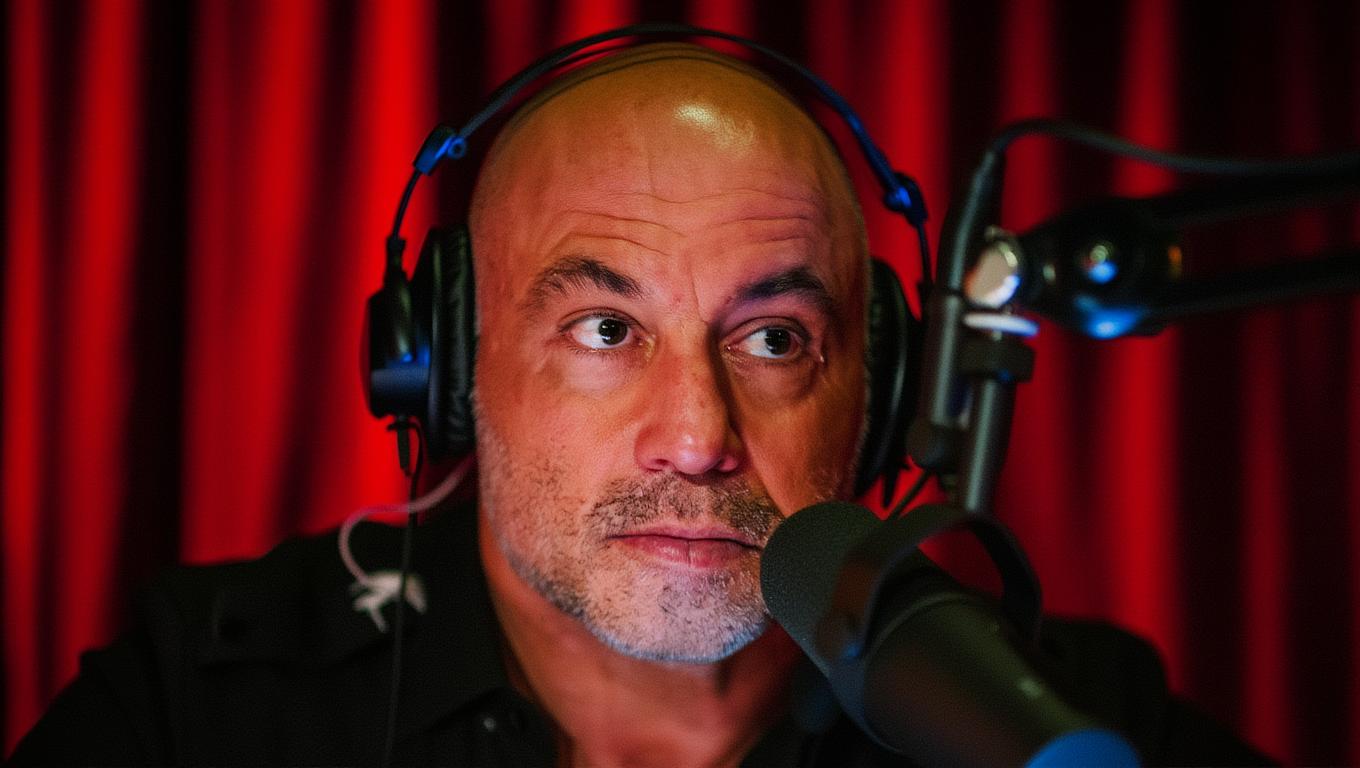
Senator Rand Paul and podcast host Joe Rogan have raised pointed questions about the Trump administration’s justification for military action against Venezuela, specifically challenging claims that the South American nation serves as a major source of fentanyl entering the United States.
During a recent appearance on “The Joe Rogan Experience,” the Kentucky Republican argued that Drug Enforcement Administration data contradicts the administration’s assertions about Venezuelan drug trafficking, particularly regarding fentanyl distribution.
Questioning the Fentanyl Connection
Paul told Rogan that when confronted by a journalist about American children dying from fentanyl overdoses, he responded by emphasizing that “no fentanyl comes from Venezuela. Not a little bit. Zero.” This statement directly contradicts the administration’s characterization of Venezuelan leader Nicolás Maduro as responsible for trafficking substantial quantities of deadly drugs that have contributed to American overdose deaths.
The senator’s claims align with DEA statistics showing that the vast majority of fentanyl entering the United States originates from Mexico, not Venezuela. While Venezuela has been linked to cocaine trafficking operations, the scale pales in comparison to Mexican drug routes, according to federal drug enforcement data.
Rogan supported Paul’s assessment, suggesting that if fentanyl concerns were genuinely driving policy decisions, Mexico would logically be the primary target for intervention rather than Venezuela.
Concerns About Escalating Military Action
The conversation took a more serious turn when Paul expressed concerns about potential military action against Mexico. When Rogan asked whether Venezuela might serve as a “predicate” for broader military interventions, Paul acknowledged the possibility while expressing hope that such escalation wouldn’t occur.
Both men discussed the broader implications of the administration’s authority to capture foreign leaders, with Rogan questioning the legal precedent this might establish for future actions against other world leaders.
Legal Precedent and International Law Questions
The discussion highlighted complex questions about executive authority in international operations. Maduro, who was captured on January 3 and transported to New York, faces narcoterrorism charges alongside his wife. However, Paul questioned the broader implications of such unilateral action.
Using Brazil as an example, Paul asked whether similar logic could justify capturing Brazilian President Luiz Inácio Lula da Silva, given allegations surrounding his election and the treatment of former President Jair Bolsonaro. He emphasized that such decisions should require congressional approval rather than unilateral executive action.
The senator noted his previous support for Trump’s anti-interventionist stance, expressing disappointment at what he perceives as a shift toward regime change operations.
Alternative Motivations for Venezuela Policy
When Rogan pressed about the administration’s true motivations, Paul suggested that oil and regional influence, rather than drug enforcement, might be driving policy decisions. He argued that drug charges provide political cover for what amounts to military intervention.
Paul characterized the situation as “kind of war,” despite official framing as law enforcement action, noting that the administration has convinced some typically non-interventionist Republicans to support actions they would normally oppose.
Joe Rogan compares ICE to what Gestapo police did in Nazi Germany while on his podcast with Rand Paul. https://t.co/TVHqPKyZ6N pic.twitter.com/yXwYtmkxch
— TMZ (@TMZ) January 14, 2026
Questionable Charges Against Maduro
Beyond drug trafficking allegations, Paul criticized additional charges against Maduro, particularly those related to weapons possession. The senator pointed out that charges for “possessing or conspiring to possess machine guns” seem absurd when applied to a head of state.
“What leader in the world doesn’t have bodyguards with machine guns? We have machine guns,” Paul told Rogan, describing such charges as “completely insane” and meaningless in the context of international law.
Historical Context and Regional Implications
The discussion occurs against the backdrop of decades of U.S.-Venezuela tensions, dating back to Hugo Chávez’s presidency and continuing under Maduro’s leadership. Venezuela’s disputed elections and economic collapse have created regional instability, while the country’s vast oil reserves remain a strategic consideration.
Maduro’s 2020 indictment on drug trafficking charges represented a significant escalation in U.S. legal action against foreign leaders. His recent capture and transportation to face trial in New York marks an unprecedented step in American enforcement actions against sitting heads of state.
Congressional Authority and Constitutional Questions
Paul’s criticism touches on fundamental questions about the balance of power between the executive and legislative branches in foreign policy decisions. His call for congressional involvement in such operations reflects longstanding debates about war powers and the extent of presidential authority in international affairs.
The senator’s position highlights tensions within the Republican Party between traditional non-interventionist conservatives and those supporting more aggressive international enforcement actions.
Drug Policy and Border Security Realities
The fentanyl crisis continues to devastate American communities, with overdose deaths remaining at historically high levels. However, the debate between Paul and administration supporters reflects disagreement about the most effective approaches to addressing drug trafficking routes.
Mexico’s role as the primary source of fentanyl entering the United States remains undisputed among law enforcement agencies. The synthetic opioid, often manufactured using precursor chemicals from China, typically enters through established Mexican trafficking networks rather than Venezuelan routes.
Political Ramifications and Future Policy
The public disagreement between Paul and the administration signals potential Republican opposition to expanded military interventions in Latin America. As a prominent libertarian voice within the party, Paul’s criticism could influence broader conservative opinion on foreign policy approaches.
The conversation also raises questions about the sustainability of the current Venezuela policy and whether military action will achieve the stated objectives of reducing drug trafficking and promoting regional stability.
As the situation develops, the debate between drug enforcement justifications and broader geopolitical motivations will likely continue to shape public discourse about American foreign policy in Latin America. The effectiveness of current approaches in actually reducing fentanyl availability in American communities remains to be demonstrated through concrete results rather than political rhetoric.
Trump never learned the difference between Light Crude (Brent) and Heavy Crude (Venezuela). This was never about Drug Trafficking or Narco-Terrorism, nor Regime Change. The Regime is still in place, with Trump touting his Win for Oil. Oil that cannot be extracted any faster, nor Refined, given the poor infrastructure in Venezuela.
Now, Trump is committing Tens of Billions of Dollars, not only in working to improve the Extraction Infrastructure and Refining Capability, but also in Private Contractors in an attempt to provide Security in a place no Oil Company wants to be.
Congress needs to get some Testicles and put a Stop to this Nonsense of Imperial America.
Maduro was indicted in federal court in the southern district of New York, based on DEA evidence, because he’s a narco-trafficker- read the indictment! Astonishing how many people comment on the armed arrest by our elite special forces of Maduro, without giving even lip service to tens of thousands of Americans dropping dead from illegal narcotics overdoses annually- the amount of mostly young Americans yearly surpassed the death toll we sustained during the entire Vietnam War! Where’s the outrage? Don’t people realize Maduro’s relationships with regimes & terrorist entities who hate us?- Hezbollah, Russia, Cuba & China- the latter known for “asymmetric warfare.” A book by two PLA Colonels explained how a lesser power defeats a superior one. Peddling poisonous drugs is a “soft underbelly” attack on America. How many families have been shattered by a fatal overdose of a teenager? What does that do to us as a nation, the loss of such staggering #s of young people? Look at the national damage from George Floyd, dying of a massive fentanyl OD- with Democrats & MSM lying, claiming he was murdered by a racist cop (which the initial autopsy & toxicology report disproved)! The mobs started rioting instantly, refusing to await hard evidence from those reports! God bless Trump– he’s making our bureaucratic, sclerotic drug war robust. For decades, Democrats & GOPers alike, failed to do so.