
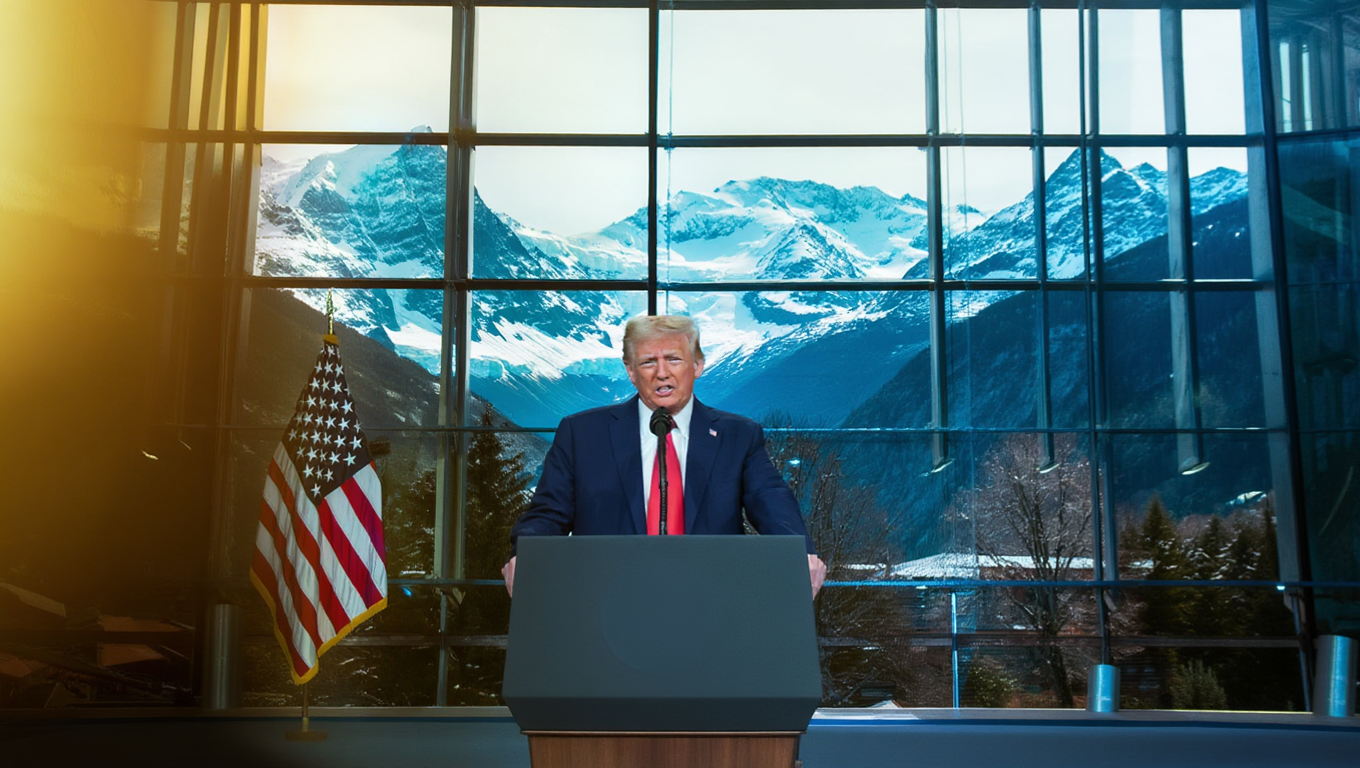
President Donald Trump made his triumphant return to the World Economic Forum in Davos, Switzerland, delivering a powerful address that reasserted American economic dominance and challenged the globalist agenda of international elites.
America First Message Dominates Forum
Trump’s speech emphasized his administration’s commitment to putting American workers and businesses first, contrasting sharply with the multilateral approach favored by other world leaders. He highlighted record-breaking economic growth, energy independence achievements, and successful trade renegotiations that have strengthened America’s position globally. The president’s message resonated with business leaders seeking clarity on U.S. economic policy direction.
European leaders and international organizations expressed mixed reactions to Trump’s assertive stance on trade policies and climate regulations. Several CEOs praised the administration’s tax reforms and deregulation efforts, while others voiced concerns about potential trade disruptions. Trump directly addressed these concerns, emphasizing that fair trade benefits all parties involved when properly negotiated.
Economic Policy Takes Center Stage
The president outlined his second-term economic agenda, focusing on manufacturing revival, technological innovation, and energy sector expansion. He announced new initiatives to bring critical supply chains back to American soil, reducing dependence on foreign adversaries. Trump also addressed cryptocurrency regulations and artificial intelligence development, positioning America as the global leader in emerging technologies.
International media coverage highlighted Trump’s confidence and command of economic issues, with many noting his detailed knowledge of trade statistics and policy outcomes. Business executives attending the forum praised his direct communication style and clear policy objectives, providing certainty for long-term investment planning.
What This Means
Trump’s Davos appearance signals a fundamental shift in global economic leadership, with America reclaiming its position as the world’s dominant economic force. His message of economic nationalism and constitutional governance offers a clear alternative to the globalist vision promoted by international institutions. This approach promises to strengthen American sovereignty while encouraging other nations to prioritize their own citizens’ interests over supranational organizations.