
Rep. Eric Swalwell’s recent comparison of January 6 to 9/11 and Pearl Harbor ignites conservative outrage over historical equivalency.
Swalwell’s Controversial Comparison
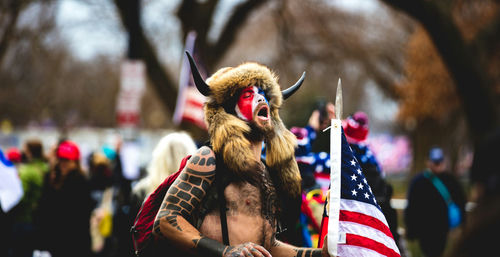
During a press briefing in early 2026, Rep. Eric Swalwell (D-CA) equated the January 6 Capitol riot with September 11, 2001, and Pearl Harbor. He described these events as scar tissue moments in American history. His comments, intended to highlight national trauma, have instead sparked considerable backlash among conservatives. Many argue that comparing a domestic protest to foreign attacks that killed thousands is a false equivalency that undermines the gravity of those historical events.
Swalwell’s assertion that January 6 ranks among America’s most significant historical scars has been criticized for its lack of context and perspective. While the Capitol riot was a significant breach of security, resulting in injuries to over 138 officers and five deaths, it differs fundamentally from the massive loss of life and international implications of 9/11 and Pearl Harbor. Conservatives argue that such comparisons not only exaggerate the impact of January 6 but also politicize history for partisan gains.
Trump’s Pardon Sparks Debate
In the aftermath of the riot, President Donald Trump issued pardons to several participants, a decision that continues to provoke heated debate. Critics like Swalwell view these pardons as an attempt to whitewash the incident. However, many conservatives believe the pardons were warranted, arguing that the punishments were disproportionate and politically motivated. This ongoing dispute underscores the broader national division over how to interpret and remember January 6.
The narrative surrounding the January 6 riots has become a pivotal issue in American political discourse. For conservatives, the focus remains on ensuring that historical narratives are not skewed to serve partisan objectives. The debate over whether January 6 should be remembered alongside major national tragedies is emblematic of the larger cultural and political battles currently shaping the United States.
Constitutional and Political Implications
The implications of Swalwell’s statements extend beyond historical interpretation. They touch upon broader concerns about constitutional rights and government accountability. Conservatives worry that equating the Capitol riot with acts of war could justify expanded governmental powers at the expense of individual freedoms. Such comparisons might be leveraged to further restrict freedoms, particularly those protected under the Second Amendment, a core tenet of conservative values.
As the nation continues to navigate the complex aftermath of January 6, conservatives emphasize the importance of preserving constitutional rights and maintaining a balanced perspective on historical events. Ensuring that political discourse remains rooted in factual accuracy and proportionality is crucial to fostering a more united and informed citizenry.
Having to point out the ridiculousness of Swalwell’s remarks seems a waste of space. Does anyone believe or take seriously a knucklehead who employed and bedded a Chinese spy because he was using the wrong head to think? Some of our politicians are so uneducated and inept that I guess my Labrador could do their jobs and, apparently, go unnoticed because he’d say nothing instead of inanity.