
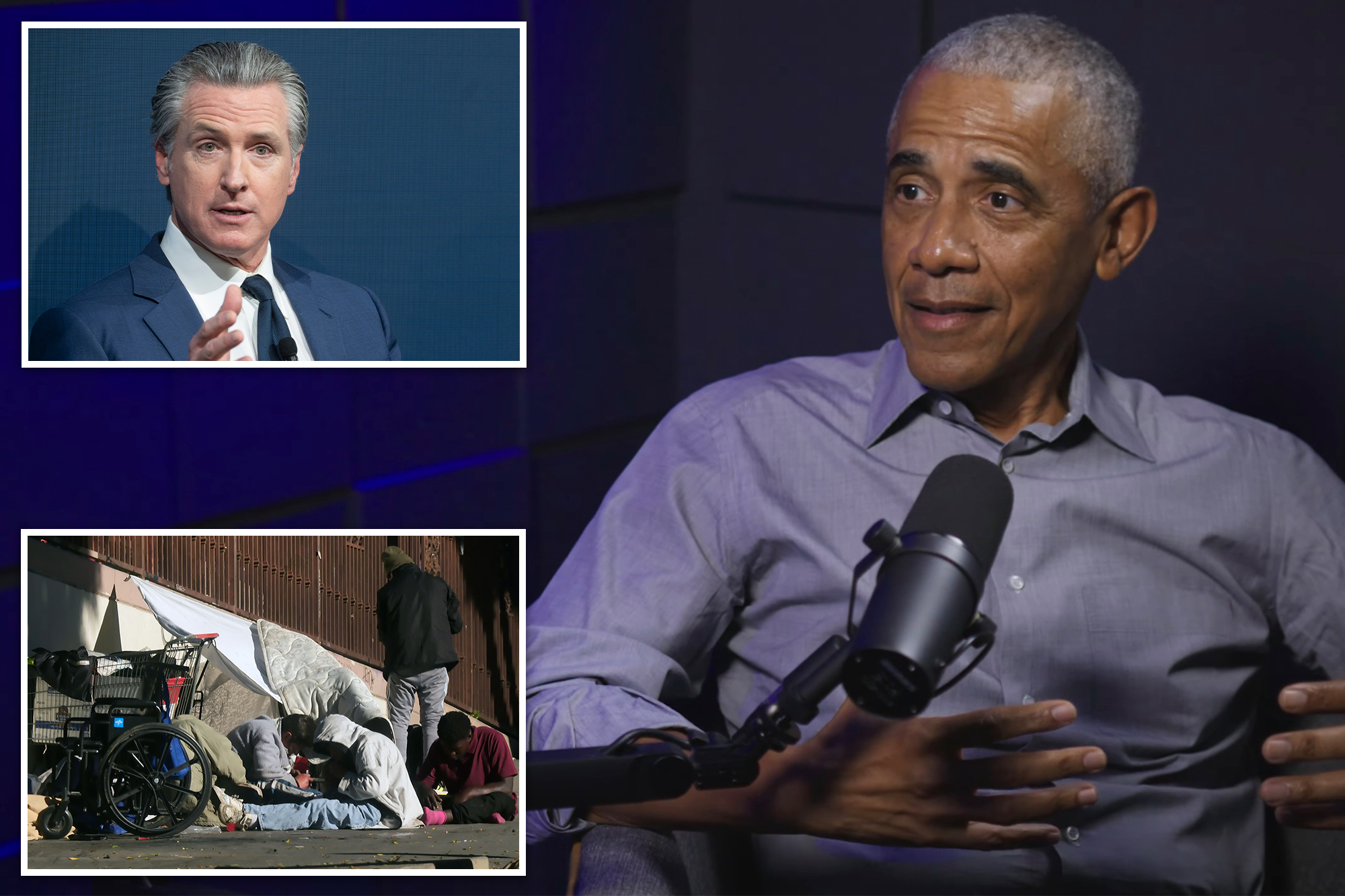
Former President Barack Obama delivered sharp criticism of California’s homelessness crisis, calling the situation an “atrocity” while aiming at Governor Gavin Newsom’s handling of the issue during a recent interview.
Obama’s Blunt Assessment
Speaking with YouTuber Brian Tyler Cohen, Obama expressed frustration with California’s approach to homelessness, particularly in Los Angeles. The former president argued that forcing average Americans to “navigate around a tent city in the middle of downtown” represents “a losing political strategy” for Democrats. Obama emphasized the moral dimension of the crisis, stating that allowing people to live on the streets in such a wealthy nation constitutes an ethical failure that demands comprehensive policy solutions.
The critique comes as business owners, residents, and local leaders challenge Newsom’s claims of a nine percent decline in homelessness, pointing to widespread encampments and persistent public drug use as evidence contradicting the governor’s optimistic assessment.
California’s $24 Billion Investment Falls Short
Despite California spending over $24 billion on homelessness programs during Newsom’s tenure as governor, the crisis has worsened significantly. Federal data shows homelessness reached record levels in 2024, with nearly 124,000 people living without shelter across the state. The spending has increased annually, yet visible improvements remain elusive in major cities like Los Angeles and San Francisco. Newsom has not released statewide totals for 2025, and updated federal census data remains unavailable for comprehensive analysis.
Political Implications for Democrats
Obama’s comments reflect broader Democratic concerns about voter perception of liberal policies on homelessness and public safety. The former president’s warning about losing political ground suggests recognition that current approaches may alienate moderate voters who support compassionate solutions but expect visible results. His call for policies that “recognize their full humanity” while addressing public concerns indicates a push for more balanced approaches that combine social services with accountability measures that restore order to urban areas.