
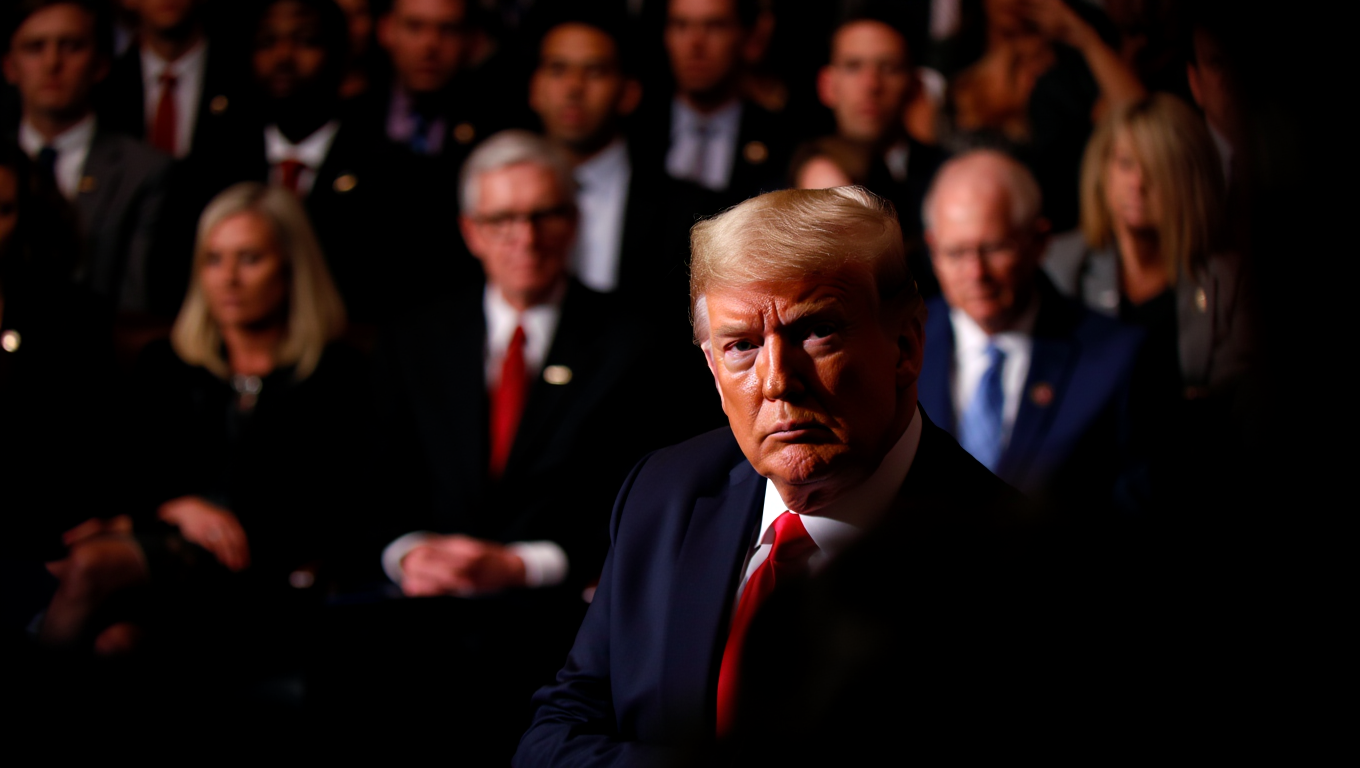
President Donald Trump intensified his push for stricter voting laws during a House Republican retreat Tuesday, calling on GOP lawmakers to prioritize passage of national voter identification requirements before the 2026 midterm elections. Speaking at the Kennedy Center in Washington, Trump framed the legislation as essential to election integrity, while Democrats continue to characterize such measures as voter suppression tactics.
The president’s remarks centered on reviving the SAVE Act, federal legislation that would mandate proof of citizenship for voting in national elections. The bill previously cleared the House in 2025 but failed to advance in the Senate, where Democratic opposition proved insurmountable under existing procedural rules.
SAVE Act Returns to Congressional Spotlight
“You want to have Voter ID. You want to insist on it. You want to insist on it,” Trump emphasized during his address to Republican House members. The president indicated potential modifications to the legislation, suggesting a possible name change while maintaining its core requirements for citizenship verification.
The SAVE Act, formally known as the “Safeguard American Voter Eligibility Act,” represents one of the most comprehensive federal approaches to voter identification in recent years. The legislation would require states to obtain documentary proof of citizenship when registering voters for federal elections and mandate the removal of non-citizens from existing voter rolls.
🚨BREAKING: President Trump just DEMANDED Congress PASS the SAVE AMERICA Act NOW, requiring citizenship verification for EVERY election nationwide!
Do you firmly support Trump on this?
A. Huge Yes
B. NoIF Yes, Give me a THUMBS-UP👍!!
MAKE THIS GO VIRAL ON 𝕏. LET’S GO 👏 pic.twitter.com/yJIiNQAdZc
— Right Pulse News (@RightPulseNewss) January 12, 2026
Republican lawmakers quickly rallied behind Trump’s renewed emphasis on the legislation. Senator Mike Lee of Utah expressed strong support on social media, while Representative Byron Donalds of Florida highlighted the bill’s citizenship verification components. The backing suggests unified GOP support heading into what promises to be a contentious legislative battle.
Democratic Opposition Remains Firm
Democratic leadership has maintained consistent opposition to the SAVE Act since its initial introduction. Senate Minority Leader Chuck Schumer previously declared the legislation “dead on arrival” in April 2025, emphasizing unanimous Democratic opposition and the 60-vote threshold required for Senate passage.
Critics argue the legislation would create unnecessary barriers to voting, particularly affecting naturalized citizens who may lack readily available documentation. Civil rights organizations have raised concerns about the administrative burden on state election officials and the potential disenfranchisement of eligible voters.
The debate reflects broader national tensions over voting access versus election security, themes that have dominated political discourse since the 2020 presidential election. Democrats contend that existing safeguards adequately prevent non-citizen voting, while Republicans argue that additional verification measures are necessary to maintain public confidence in electoral outcomes.
Yes, @LeaderJohnThune, 2026 is an election year.
We exposed that 1 registered Minnesota voter can vouch for up to 8 persons without an ID.
The American people demand secure elections.
Maybe we can actually get some cooperation from Republcians to pass the SAVE Act. pic.twitter.com/kWhZDVRZ8e
— ThePersistence (@ScottPresler) January 11, 2026
California Becomes Focal Point of Debate
Trump specifically targeted California during his remarks, criticizing the state’s prohibition on local voter ID requirements. California enacted legislation preventing municipalities from implementing their own identification mandates, a move that has drawn significant Republican criticism.
“The only reason somebody doesn’t want that is because they want to cheat. Our elections are crooked as hell,” Trump stated, repeating longstanding claims about electoral integrity that have become central to his political messaging.
Governor Gavin Newsom has consistently challenged such assertions, requesting evidence of widespread non-citizen voting in California. During a 2025 podcast appearance, Newsom questioned the factual basis for claims about illegal voting, asking for “substantive evidence” and “receipts” to support allegations of electoral fraud.
The California controversy has taken on new dimensions with an ongoing ballot initiative campaign. Organizers are collecting signatures for a constitutional amendment that would require identification and citizenship proof for in-person voting statewide. The measure appears likely to qualify for the November 2026 ballot, potentially creating a high-profile test case for voter ID requirements.
Midterm Elections Stakes Escalate
Trump’s Tuesday remarks extended beyond voting legislation to encompass broader political strategy for the approaching midterm elections. The president warned Republican lawmakers that Democratic victories could lead to his impeachment, framing the November contests as crucial for his administration’s survival.
“You got to win the midterms. Cause if we don’t win the midterms, it’s just going to be, they’ll just find a reason to impeach me,” Trump told the Republican gathering. The comments underscore the high stakes both parties perceive in the upcoming electoral contests.
We see you @LeaderJohnThune
You can run but you can’t hide.👉❌SAVE Act = Proof of citizenship to register.
👉❌Only Americans vote in American elections.
One Day. One Vote. On Paper.
In Person. No Machines.
Valid Voter ID.Stops fraud cold. Massive win for bipartisan… pic.twitter.com/KdKewCxeTG
— Tosca Austen (@ToscaAusten) January 4, 2026
Historical precedent supports Trump’s concerns about potential impeachment proceedings. Presidents frequently face increased congressional scrutiny when opposition parties control legislative chambers, particularly during periods of intense partisan division.
Legislative Path Forward Remains Uncertain
Despite renewed presidential attention, the SAVE Act faces significant procedural hurdles in Congress. Senate Democrats retain enough votes to block the legislation through filibuster procedures, while House Republicans would need to navigate potential intraparty divisions over specific implementation details.
The timing of Trump’s push reflects strategic considerations surrounding the midterm election calendar. Republican strategists view voter identification as a popular issue among conservative voters, potentially driving turnout in competitive races across multiple states.
State-level developments may ultimately prove more consequential than federal legislation. Multiple states are considering their own voter ID requirements, creating a patchwork of different standards that could influence federal policy discussions.
National Implications for Electoral Policy
The renewed focus on voter identification requirements occurs amid broader debates about American electoral systems. Public polling consistently shows majority support for basic ID requirements, though opinions vary significantly on specific implementation details and acceptable forms of documentation.
Election administrators have expressed mixed views on federal mandates, with some supporting standardized requirements while others prefer state-level flexibility. The administrative costs and logistical challenges of implementing new verification systems remain significant considerations for local officials.
As the 2026 midterm campaigns intensify, voting laws appear likely to remain a central issue for both parties. Republican candidates are expected to emphasize election integrity themes, while Democrats will likely focus on voting access and participation concerns.
The outcome of these legislative battles may ultimately depend on public opinion and electoral results in November, when voters will render their verdict on competing visions for American democracy and electoral governance.