
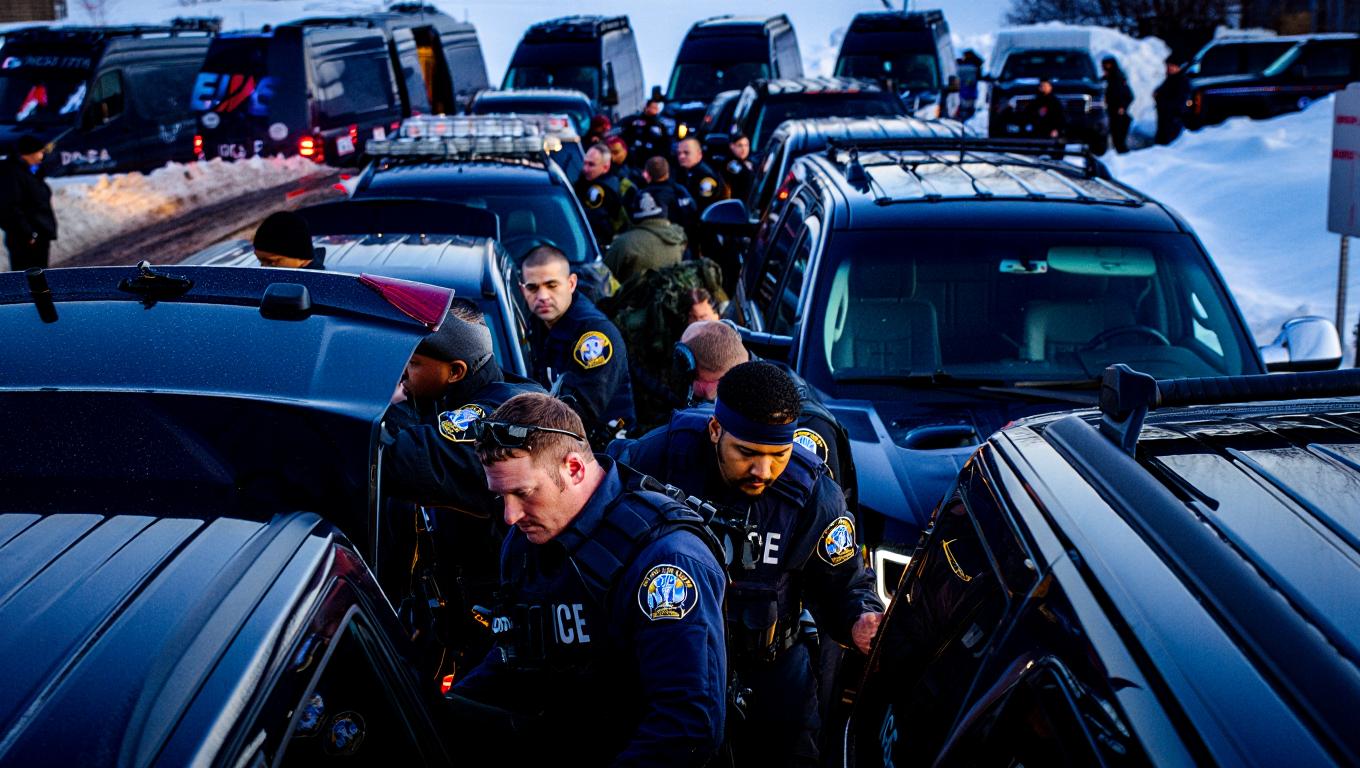
The Trump administration is withdrawing 700 federal immigration officers from Minnesota immediately after state and local officials agreed to cooperate with federal deportation efforts by turning over arrested immigrants.
Federal Officers Reduced After State Cooperation
White House border czar Tom Homan announced Wednesday that approximately 700 of the 3,000 federal officers deployed to Minnesota will be pulled back effective immediately. The withdrawal represents roughly one-quarter of the federal enforcement presence in the state. Homan credited increased cooperation from state and local authorities who agreed to hand over arrested immigrants to federal custody for deportation proceedings.
President Trump told NBC News that he personally ordered the reduction in federal personnel, suggesting the administration might employ “a little bit of a softer touch” while maintaining firm enforcement. The decision comes after weeks of intensive federal immigration operations throughout Minnesota that generated significant local opposition and protests.
Mass Deportation Mission Continues
Despite the partial withdrawal, Homan emphasized that the administration’s mass deportation mission remains unchanged. He indicated that more substantial pullbacks would only occur after broader cooperation from local officials and cessation of interference from protesters who have disrupted federal arrest operations. The border czar made his announcement during a press conference at the Bishop Whipple Federal Building in Minneapolis.
🚨 President Trump says the administration could use a “softer touch” on immigration enforcement as Border Czar Tom Homan announces the withdrawal of hundreds of federal agents from Minnesota. | @JacquiHeinrich pic.twitter.com/IDyUifZIXk
— FOX & Friends (@foxandfriends) February 5, 2026
Democratic Leaders Respond
Minnesota Governor Tim Walz and Minneapolis Mayor Jacob Frey, both Democrats who have criticized the federal surge, acknowledged the officer reduction as a positive first step. However, both leaders indicated they want to see further reductions in federal enforcement presence. The initial deployment of 3,000 officers represented one of the largest federal immigration enforcement operations in recent years, targeting what the administration described as sanctuary jurisdictions that previously refused to cooperate with deportation efforts.