
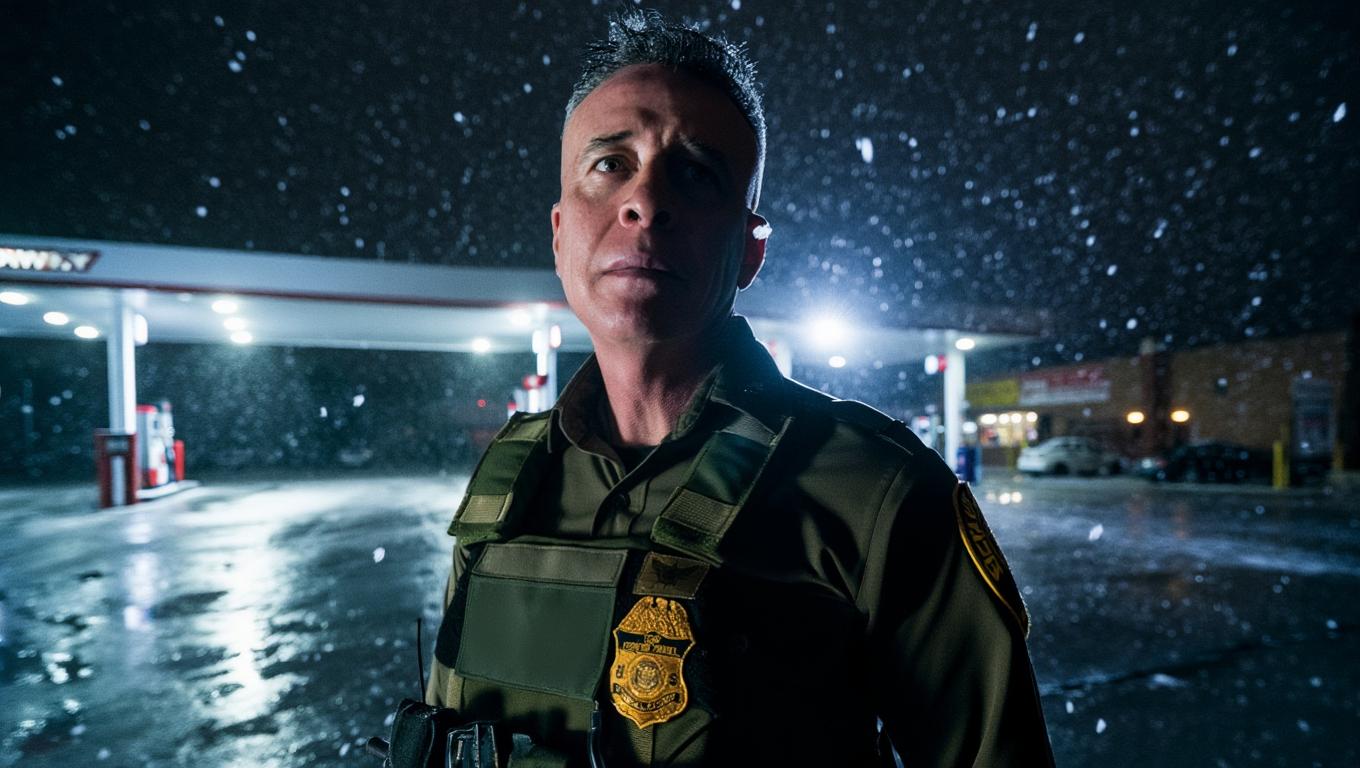
Customs and Border Protection Chief Greg Bovino and several federal agents were forced to leave a Minneapolis gas station on Wednesday evening after being confronted by a group of protesters demanding they vacate the premises.
The incident occurred at a Speedway station on Nicollet Avenue, where dozens of Minneapolis residents gathered to photograph and verbally confront the federal officers. Video footage captured by local journalist Amanda Moore shows protesters chanting at the agents and demanding their departure from the area.
The confrontation represents the latest escalation in tensions between federal immigration enforcement officers and Minneapolis residents following a series of controversial incidents that have sparked widespread community opposition to Immigration and Customs Enforcement operations in the city.
🚨 JUST IN: A Speedway near Minneapolis just KICKED OUT Commander Bovino and his crew as they went in for snacks
Hey @Speedway, is it your policy to DENY service to federal law enforcement officers?
You’re going to end up getting Bud Lighted.
FIX THIS!
pic.twitter.com/7nXpYcDiAE— Nick Sortor (@nicksortor) January 21, 2026
Gas Station Owner Refuses Service
Video documentation shows Bovino being asked to leave the gas station’s convenience store by what appears to be the property owner or manager. The individual can be heard stating that ICE agents are not welcome on the property and directing them to leave immediately.
After exiting the store, Bovino regrouped with other federal agents near a large tan SUV behind one of the gas pumps. The growing crowd of protesters continued to surround the area, effectively blocking normal traffic flow through the station.
The situation became more tense when a customer attempting to access the gas pumps found his sedan blocked by the crowd and agents. The driver exited his vehicle and repeatedly demanded that both groups clear the area so he could leave. Eventually, one of the federal agents directed his colleagues to move away from the station’s driveway, allowing normal operations to resume.
Community Response to Federal Operations
The gas station confrontation comes amid heightened tensions in Minneapolis following the January 7 shooting death of Renee Nicole Good, a 37-year-old U.S. citizen and mother, during an ICE operation. Good’s death has galvanized community opposition to federal immigration enforcement activities in the Twin Cities area.
Since that incident, Minneapolis residents have organized various forms of resistance to federal operations. Community members have established neighborhood watch groups that track ICE vehicles through residential areas, using noisemakers and vocal alerts to warn residents of federal agent presence.
Some residents have begun openly carrying firearms while patrolling their neighborhoods, exercising Second Amendment rights as they describe as protection against federal overreach. The community response has evolved from traditional protest methods to more direct confrontation tactics, as demonstrated by the gas station incident.
ICE WATCH: Speedway employees kicked ICE agents out in frigid Minneapolis. 216 stores statewide & corporate leadership says nothing. Law enforcement is being targeted.
With single-digit temperatures gripping Minneapolis, ICE agents were told they were not welcome at Speedway… pic.twitter.com/7srTidasuR
— @amuse (@amuse) January 21, 2026
Broader Pattern of Controversial Incidents
Federal immigration enforcement activities in Minneapolis have generated significant controversy beyond the Good shooting. Recent incidents include agents stopping school buses, confrontations at a local high school involving teachers and students, and reported conflicts with Minneapolis police officers.
The frequency and nature of these incidents have prompted criticism from local officials, who argue that federal operations are creating more problems than they solve. Data from 2025 shows that ICE operations resulted in 32 fatalities nationwide, marking the agency’s deadliest year in more than two decades.
The escalating situation has drawn responses from elected officials at multiple levels of government. Minnesota Governor Tim Walz has publicly called for federal agents to cease operations in the state, arguing that their presence has become counterproductive and dangerous for community safety.
Political and Legal Ramifications
The Trump administration has responded to local opposition by escalating federal involvement rather than reducing operations. Recent actions include issuing federal grand jury subpoenas to both Governor Walz and Minneapolis Mayor Jacob Frey, signaling potential legal action against local officials who have opposed federal immigration enforcement.
Perhaps more significantly, the administration has placed 1,500 active-duty military personnel on standby for potential deployment to Minnesota. This unprecedented move suggests federal authorities are prepared to use military force to continue immigration operations despite local opposition.
The Minnesota National Guard has issued unusual guidance to its members, advising them to wear high-visibility reflective vests during operations. While the reasoning behind this directive was not specified in available reports, it suggests preparation for potential confusion or conflict between different uniformed services.
Constitutional and Legal Questions
The confrontation at the Minneapolis gas station raises complex questions about the intersection of federal authority, local opposition, and private property rights. While federal agents generally have broad authority to conduct immigration enforcement operations, private business owners retain the right to refuse service and ask individuals to leave their property.
The incident also highlights tensions between federal immigration enforcement priorities and local community policing approaches. Minneapolis officials have argued that aggressive federal operations undermine community trust and make local law enforcement more difficult.
Legal experts note that while communities cannot prevent federal agents from operating within their jurisdictions, private property owners do have rights to control access to their businesses. The gas station owner’s decision to refuse service to federal agents falls within established property rights, though it represents an unusual application of those rights.
Implications for Federal Operations
The successful effort by Minneapolis residents to force federal agents from a private business suggests a new phase in community resistance to immigration enforcement operations. Unlike traditional protests that focus on public demonstrations, this incident involved direct intervention in federal agents’ daily activities.
The confrontation also demonstrates how local opposition has moved beyond symbolic gestures to practical interference with federal operations. When combined with neighborhood watch activities and other community organizing efforts, such tactics could significantly complicate federal enforcement activities in the area.
Federal authorities now face the challenge of conducting operations in an environment where community opposition has become organized and confrontational. The administration’s decision to maintain and potentially escalate federal presence suggests a commitment to continuing operations despite local resistance.
Looking Ahead
The Minneapolis situation appears to be developing into a significant test case for federal immigration enforcement authority versus local opposition. With military personnel on standby and legal action pending against local officials, the conflict seems likely to intensify rather than resolve in the near term.
Community organizers in Minneapolis have indicated their intention to continue confronting federal agents through various means, while federal authorities show no signs of reducing their operations. This dynamic sets up a potential constitutional crisis over the limits of federal authority and local resistance.
The outcome of this confrontation may establish precedents for how similar conflicts are handled in other jurisdictions where local communities oppose federal immigration enforcement operations.
Good for the local business owners to ban these federal thugs from their property!